.png)


Thermal Conductivity of Graphene: Why This Material Is Revolutionizing Electric Heating

What if the solution to the problem of electric heating—often perceived as energy-intensive and inefficient—lay in a sheet of carbon just one atom thick? Graphene, first isolated in 2004 by physicists Andre Geim and Konstantin Novoselov (2010 Nobel Prize in Physics), possesses a property that has intrigued heating engineers for over a decade: exceptional thermal conductivity, surpassing that of diamond, copper, and all other materials known to date.
In this article, we explore the physical basis of this exceptional conductivity, its implications for residential and industrial electric heating, and how graphene-printed heating films are redefining energy efficiency standards.
What is thermal conductivity, and why does graphene break all records?
Thermal conductivity measures a material's ability to conduct heat. It is expressed in watts per meter-kelvin (W/m·K). The higher the value, the more quickly and evenly the material conducts heat.
A few points of reference to help understand graphene
Here is a ranking of the main heat-conducting materials:
- Air: ≈ 0.025 W/m·K
- Water: ≈ 0.6 W/m·K
- Steel: ≈ 50 W/m·K
- Aluminum: ≈ 237 W/m·K
- Copper: ≈ 400 W/m·K
- Diamond: ≈ 2,000 W/m·K
- Graphene: up to 5,300 W/m·K
According to scientific data compiled on the Wikipedia page dedicated to graphene, this material has the highest thermal conductivity ever measured at room temperature. It exceeds that of copper—which has been used for decades in heating circuits—by more than 13 times.
Why is graphene so thermally efficient?
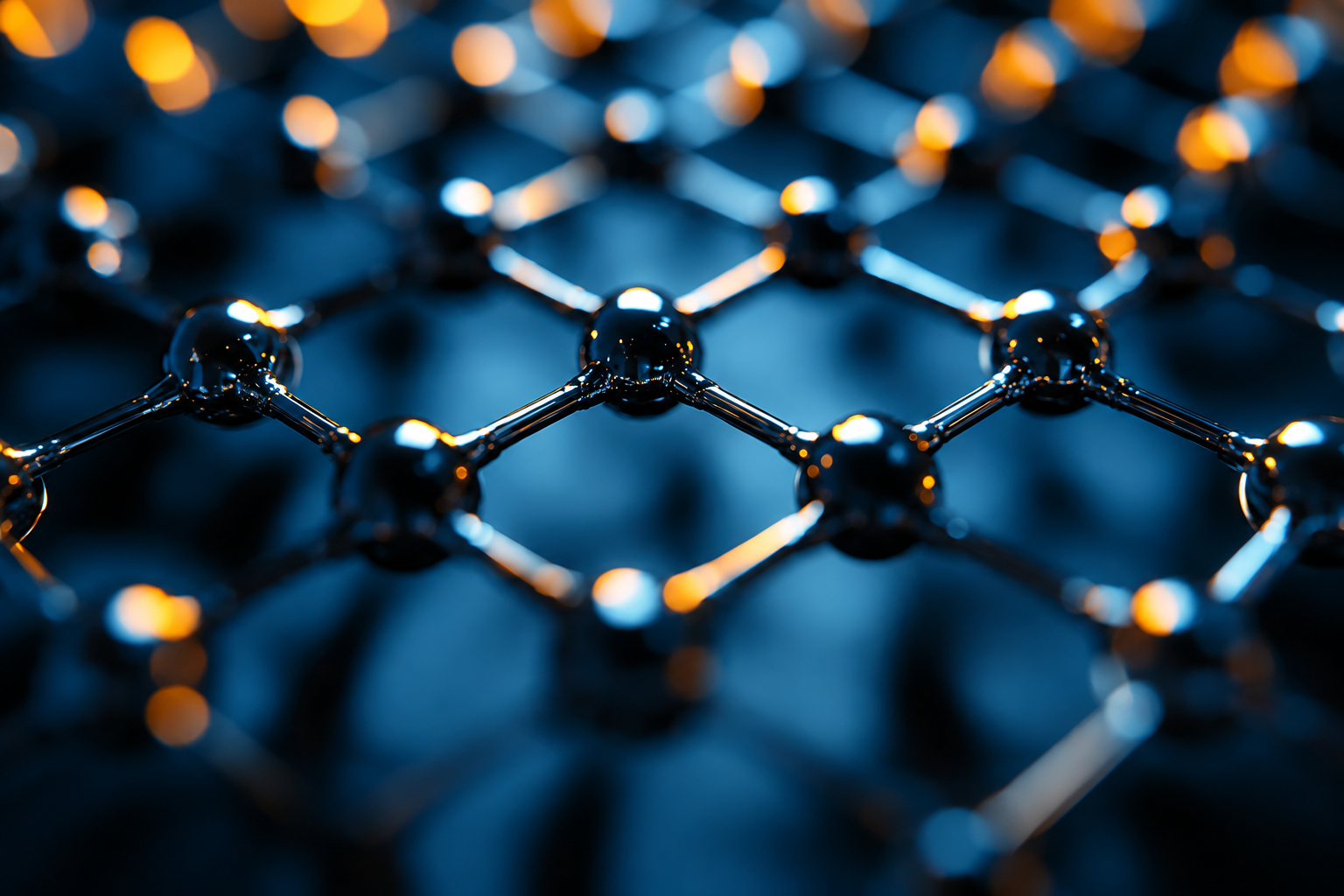
The answer lies in its atomic structure. Graphene consists of a single layer of carbon atoms arranged in a hexagonal lattice—what is known as a two-dimensional (2D) material. This perfectly ordered structure allows phonons (the quasiparticles that carry heat in solids) to propagate with almost no scattering or loss.
A study published in *Nature* has even shown that graphene partially violates Fourier’s law of thermal conduction: its thermal conductivity increases with the size of the sample, a unique behavior that sets it apart from conventional 3D materials.
Even more surprising, researchers at EPFL have shown that in graphene, heat propagates in the form of waves known as “second sound”—much like sound in air—even at room temperature. Until now, this phenomenon had only been observed near absolute zero.
The Limitations of Traditional Electric Heating
Conventional electric radiators typically rely on metal heating elements (nichrome wire, cast iron plates, or ceramic elements) that generate heat through the Joule effect. These technologies have several limitations:
A gradual rise in temperature
Cast-iron or storage radiators can take 15 to 30 minutes to reach their set temperature, resulting in excessive energy consumption at the start of the heating cycle.
Uneven distribution
Hot spots near the radiator create areas of overheating, while the ends of the radiator remain cooler. As a result, the perceived thermal comfort is lower than the actual power consumption.
Limited energy efficiency
According toADEME, heating accounts for an average of 66% of energy consumption in French homes. Any improvement in the efficiency of electric radiators therefore has a direct impact on energy bills and carbon footprints.
How graphene is transforming electric heating
The integration of graphene into heating systems goes beyond simply improving thermal conductivity. It redefines the very architecture of the radiator.
The principle behind graphene-printed heating film
Instead of concentrating heat on a wire or a plate, a graphene-based conductive ink is printed onto a flexible polymer substrate. The result is a continuous heating surface, just a few hundred microns thick, that distributes heat evenly across its entire surface.
This is exactly the principle behind the Anchiale™ technology developed by Graphenaton: a graphene-printed polymer film designed for use in next-generation electric radiators.
Three measurable benefits for the user
1. Nearly instantaneous heating. Graphene’s thermal conductivity allows the film to reach its operating temperature in just a few seconds, compared to several minutes for a conventional heat sink. No more long and costly preheating.
2. Perfectly even heat distribution. No hot spots, no cold spots. Heat is distributed across the entire surface of the film, which improves comfort and allows the set temperature to be lowered without compromising thermal comfort.
3. Energy savings of 30 to 40 percent. According to data provided by Graphenaton in an interview with Pierre-Noël Formigé published on Sphere, radiators equipped with Anchiale™ film reduce energy consumption by 30 to 40 percent while maintaining the same performance, and are 40 to 50 percent cheaper to produce than current solutions.
EEC Certification and Eligibility for Energy Subsidies
Beyond sheer performance, regulatory compliance is key. Radiators equipped with Anchiale™ film are designed to meet the NF Électricité 3-star “eye” performance standard, which makes the equipment eligible for the Energy Saving Certificate (CEE), a French government incentive program designed to support the replacement of older convector heaters.
This certification sends a strong signal to the residential heating market: it validates the product’s energy efficiency and makes it financially accessible to a wider audience.
Beyond heating: other thermal applications of graphene
The thermal conductivity of graphene is not limited to active heating. It opens up a wide range of industrial applications:
- De-icing wind turbines: a heating film integrated into the blades prevents ice from forming without the need for complex hydraulic systems.
- Electronics cooling: Rapid heat dissipation enables the miniaturization of components while preventing overheating.
- Automotive industry: preheating electric vehicle batteries in cold weather, windshield defrosting, ultra-thin heated seats.
- Construction: heating films integrated into walls, ceilings, or floors for invisible radiant heating.
What challenges remain to be addressed?
Despite these spectacular results, the widespread adoption of graphene heating still has several hurdles to overcome:
The cost of producing graphene
Historically very high, it has fallen sharply thanks to new synthesis methods such aselectrochemical exfoliation, which makes it possible to produce high-quality graphene at a lower cost and with a reduced environmental impact.
Standardization of the material
The properties of graphene vary depending on the production method. Organizations such as ISO/TC 229 and IEC/TC 113 are working to establish standards to ensure reproducibility and industrial reliability.
The Industrialization of Printed Films
The transition from the laboratory to mass production requires strong industrial partnerships and suitable manufacturing chains—an area in which companies like Graphenaton are already active, with commercial contracts in France, Austria, the United Arab Emirates, Saudi Arabia, and Canada.
Conclusion: A Paradigm Shift in Heating
Graphene’s exceptional thermal conductivity is not merely a laboratory curiosity. It forms the technological foundation for a new generation of heating systems: faster, more uniform, more energy-efficient, and better aligned with the goals of energy transition and carbon neutrality by 2050.
For both residential and industrial users, graphene heating offers a viable path toward substantially reducing energy consumption without compromising on comfort. And as the first products featuring Anchiale™ technology hit the market, the time has come to look beyond traditional electric heating elements.
To learn more, check out our articles on the graphene applications in wind turbine de-icing and on the differences between lithium-ion batteries and graphene supercapacitors.


